ddk: "Counter-Strike feels like it elevates or cares about the competition the most"
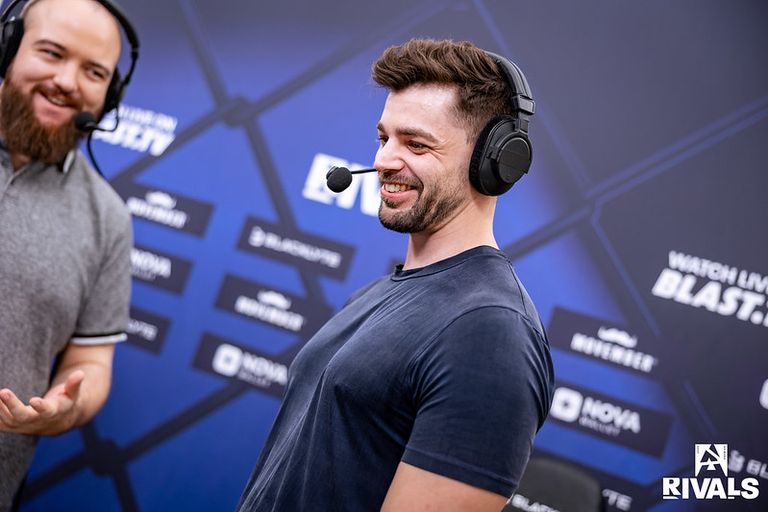
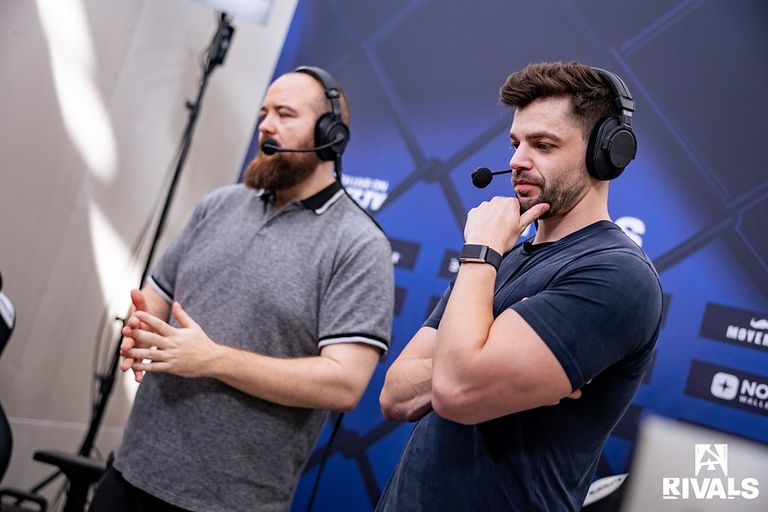
ddk is back, and dare we say it, better than ever. One of the iconic voices of Counter-Strike, he took a little trip to VALORANT and hasn't casted a CS event since PGL Stockholm 2021, but he's made his return alongside Anders for BLAST Rivals.
It's a joy to have such a historic figure return to the scene, so how else could we mark the occasion than by getting his thoughts on his return to the scene?
We caught up with ddk to discuss changes to CS, his experiences in VALORANT, and his excitement on casting with a fellow legend in Anders.
"It feels great to work in CS again"
Welcome back to Counter-Strike, how does it feel to be casting in CS again?
It feels great to work in CS again and I could really explain that in a very long form manner, but I will try to keep it short and focus on one or two things, as an explanation as to why it feels great for me.
Firstly, I've worked in a lot of different esports at the top level at this point as a broadcaster, and Counter-Strike feels like it elevates or cares about the competition the most. The TOs care about the competition the most, the fans care about the competition the most, and for the players, the scene has so much longevity. Counter-Strike as a game has been around forever, and the level of competition is also at the highest in any esport.
I'm someone with background asa pro player and I really feel like I spiritually identify as just a competitor. That is what I care about, so much, and it's something that has been the most impactful vector for self-improvement in my life.
I'm obsessed with performance. I'm obsessed with competition. And so I'm back in a environment where that is valued extraordinarily highly. So for me, that just feels good. It feels like I'm in the right place.
Secondly, I have these contrasting experiences working in other esports. So it feels good to be able to start executing some of these skills that are built up over time and get back into the swing of things here in a game that really makes you feel valued as talent because everyone does care about the competition so much.
As talent your job is to communicate and translate the really high level stuff into narratives that help the fans to connect more with the players or the teams and the game. To help them care, to elevate moments, so you get everybody closer to competition. So, again, it's a privilege to be in a position to be a part of that experience for the fans.
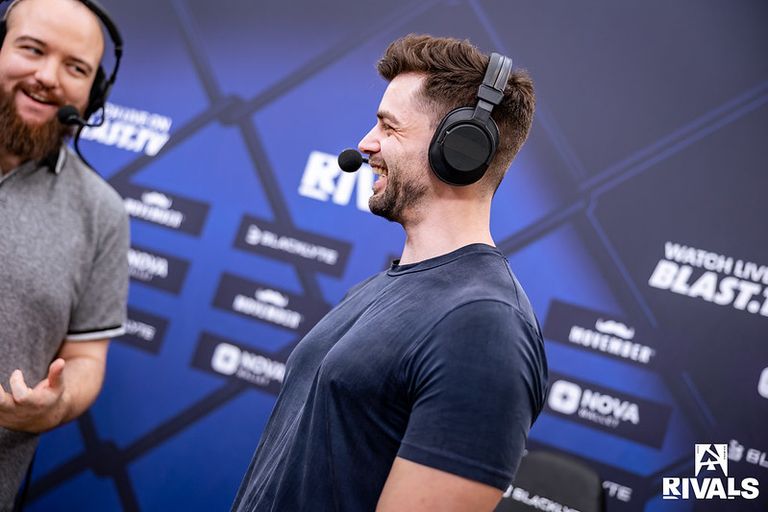
CS is obviously very different to the last time we heard you casting given that it’s a new game now, what are you finding to be the biggest difference to how it was before?
So the beautiful thing about Counter-Strike is that it has stayed the same principally, fundamentally, for its entire existence You get some new mechanics here and there, for example, going into CS:GO, you get the Molotovs, going into CS2, you can disperse the smoke with an HE. But fundamentally, it's just the same game, really.
There's just these small differences in how the tactics kind of play out and what strategies might be viable. You get these skybox changes which change and tweak those types of possibilities as well.
So ultimately, it is still just fundamentally the same game and as a commentator, you should understand how a tac FPS works in first principles, and those first principles are still the same. It's just there are some different variables.
The thing that tends to be the biggest difference is typically the meta, because as we can understand, the maps don't change that much, and the metas move fairly slowly, but eventually they do change.
With the addition of CS2 and some of the net code or mechanical differences, there are some different emphases. There is a different emphasis on maybe what roles a team should prioritise, such as whether the AWP is now more or less valuable? Peeker's advantage is a bit better, so now playing a bit more aggressively or playing a faster pace is important. The MR12 change as well, maybe that's going to impact how people will value their economy or the economic decisions they'll make.
But again, all these things are kind of essentially operating as just variables.
The underlying principles are the same. So, coming back to CS feels very familiar.
Which teams are you looking forward to casting now that you’re back in CS?
I am looking forward to casting the best teams, which is a privilege because that means you're working a tier one event. [laughs] I have to say that it's not because of working a tier one event that I want to cast the best teams, but it is because I want to see the best version of Counter-Strike, and seeing a team that has figured out peak performance is what I love to dissect the most.
Then what's really cool is that when, once you have established that, there's going to be a team that comes along and finds a way to beat that team. At its core, that's the most important story in any game of competitive Counter-Strike. How does one team beat the other team when both teams are so good?
So, I really love how amazing Vitality look right now. I think it's very cool that we have, after having had that Spirit performance in 2024, we know that their capabilities are there to challenge the best team in the world, which currently is Vitality, so there's the potential for them to be able to do that this year going into the Major.
We've also got Falcons who are starting to turn things around on paper. We'll have to see how long that lasts. I definitely have my concerns for that team. I'm curious about the things we, as people on the outside, can't know. Having done a lot of work in the performance space, as a GM and performance coach, it's something that I look at and I'm like, "OK, we don't know what the culture in the team is like, we don't know if they get past the honeymoon period, what level of resiliency exists in the team just yet." That's hard for us to know. We just don't have the information.
So, there's a lot of questions for me with Falcons, but they certainly have the skill on the team to compete with the best as well.
There's a lot of interesting elements here where we're looking at all this potential, and so for me, it's very interesting to see the best teams, and then to see the teams that have the potential to beat those teams and to see whether that potential will be realized.
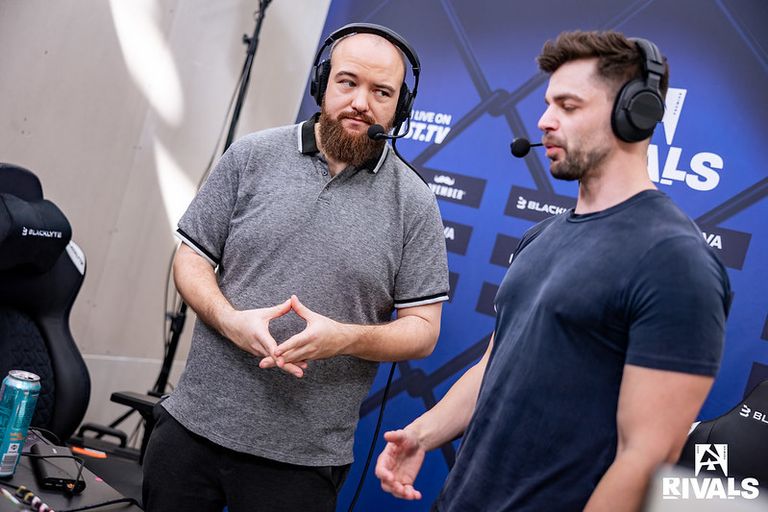
"Working in VALORANT was filled with highs and lows"
You worked on VALORANT in your time away from CS, what was your experience like in VALORANT?
In a nutshell, working as a broadcaster in Valorant was filled with highs and lows. Anytime I was working with seang@res, I would consider that a high point, and anytime I was not working with Sean, I would consider a low point.
Sean and I worked really hard and we were very passionate about the products that we were putting out there, and the fans were absolutely loving it. I'm just sad that Riot didn't see it the same way, and that we had so many problems just getting to work together to just do the thing that we were really good at.
So yeah, I guess a difference of opinion there and and maybe that's something to go into more detail another time.
You also GMed 100 Thieves in VALORANT, what was that like?
GMing in VALORANT with 100 Thieves was an invaluable experience for me. It's given me the confidence to offer this for teams in CS and to maybe just do performance coaching because I've actually had quite a few offers come my way for GMing in CS. The issue seems to always be funding right now, the economic climate's not the best in esports at the moment.
So, I've decided instead to offer services as a performance coach, where I'm gonna solve the same types of problems that I was trying to solve as a GM, but doing it in a more incisive way on a shorter term contract potentially, which gives me a lot more flexibility and it gives teams a lot more flexibility and perhaps a lot more value as well.
As a GM I got to test a lot of things that were maybe experiences I had as a competitor that worked for me when I was leading teams in the past, or I got to test things that were more theoretical. Things that I had learned through reading books, picking things up vicariously through other coaches that I knew or was was talking to and learning from. I got to have a go myself and put myself in the shoes of someone that is accountable for winning at the tier one level.
I had a lot of successes, I had a lot of failures, and I had a lot of lessons learned. It was an experience that I think was pretty transformative for me because it made me realize that I really want to pursue work like this.
It's very fulfilling, very stressful, but it's very fulfilling. When you're looking at helping teams, usually you can kind of break down the issues into one of two areas. It's either gonna be a micro issue or it's going to be a macro issue.
A micro issue, practically speaking, might be that one player is having some specific problems, and just by fixing that one player's issues, resolving them. You can actually transform the entire team. This is an experience that we actually had at 100 Thieves in 2022, and it's probably my biggest success story because I was able to spot the problem, and I was able to understand what the type of problem was, and I was able to find the absolute best solution for that problem.
That is part of what your role as a GM is, to have all of the knowledge to know how to get the best answer for the problem. But you can't do that unless you have the understanding that allows you to see what the real problem is.
GM is a role where you're protecting the players as well, because you have leadership-level authority, and a lot of teams mess up because they don't have anyone there to protect the interests of the players, of the culture of the team, of the systems and the rest of it. A coach can't really do that, they don't have the authority to protect the players in that way.
If you're at a high level team, you're gonna have loads of people that will be trying to steal time and energy away from your players that can harm performance. You need a GM that knows what they're doing so that they can protect the interests of the performance of the team. But you can't know that unless you have all of the knowledge about how performance works.
It's something that I'm super passionate about and so the time I spent 100 Thieves, although I wish that it would have ended a bit differently, being affected by the layoffs and so on, but that's just the reality of esports. It's something that I think could be one of the most important experiences I've had in my life.
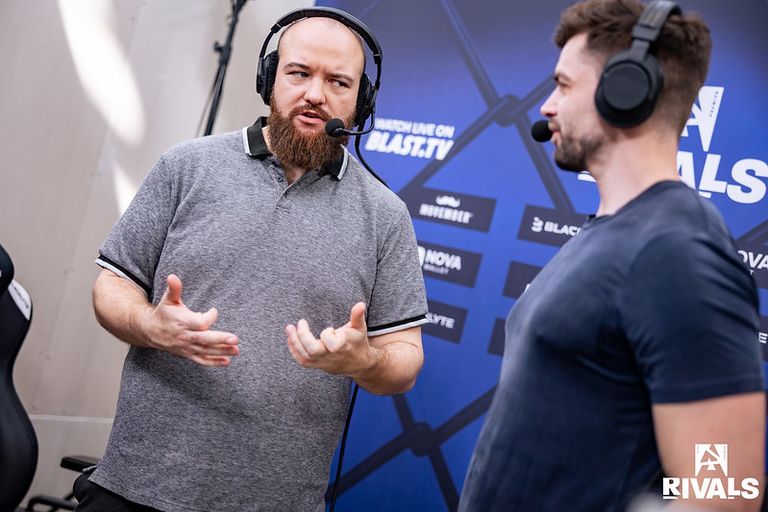
Given the amount of abilities in VALORANT, is it harder to cast in VALORANT? What are the differences?
I actually really enjoyed casting Valorant because I think it's a very hard game to cast. The reason is because if you're going to cast a game, you should be able to highlight what is the most important thing and then create that expectation with the viewer and that important thing could be part of the strategic narrative, there could be an overarching a strategic narrative, and then there's all these tactical narratives that fit within that.
At each given moment when you're trying to say something, it's like comedy in a way. Where in comedy you have set up for a joke, and then you have the payoff, the whole point of the setup is to hook people in, it's to get them to expect something. Then you get to the point of that payoff, which is when the thing happens, and then you start the whole process over again.That is like one way to look at how casting actually works, because ultimately, casting is about engaging the audience.
So in VALORANT, there are so many powerful and very specific aspects to the strategy and the tactics, the utility, and the roles that, because it's so well defined, you can predict stuff a lot more easily and you can set stuff up a lot more easily as a broadcaster.
This is one of the reasons why Sean and I were really strong as commentators, because we had a really good ability to do this, and we also worked very much on no fluff. If we're in a given point of the round, we're always talking about or trying to talk about the most important thing, and if the most important thing isn't evident, we'll pick a very important or supplementary point that is also going to be helping viewers to really engage with the match.
You don't have time to waste in VALORANT, it's a lot quicker in that regard. Whereas in Counter-Strike, you have a lot more time where you can kind of fit in banter, where you can fit in other things that may not be super pertinent and the part of the reason is because in Counter-Strike, at least in CS:GO, the rounds were a bit slower, the matches were longer, and you also had scenarios where there's lots of default, so you don't really know precisely what that hook should look like just yet, or where the payoff is going to be, but it was very clear in VALORANT , and that was the challenge of casting the game. That was something that I got out of it, developing the skills that go with that.
"I'm very excited for the growth of the duo"
Now that you’re back you’re casting CS you’re doing so with Anders, what’s it like to be duoing with him?
Casting with Anders is a cool opportunity because we're both obviously highly tenured, experienced casters.
Whenever you put a duo together it should be the case that, like any good team, it's greater than the sum of its parts. The way that that works is that you have unique strengths and then they kind of mesh together in this unique fashion, and you both have to then figure out, OK, what are our strengths? What do we want to keep? What do we want to maybe change? What do we want to add? And then suddenly you have this thing that's just uniquely that duo.
So that's what we're currently working on, and as career commentators, it's something we're both really passionate about. The job and about creating a great product for the fans.
I think we're both really excited to see how that goes. We've got like 3 events that we'll be doing, and so it's a good amount of time, hopefully quickly, to get a good product that people really enjoy and that challenge is something we're both really excited about.
After BLAST Rivals you’ll be casting in PGL Astana, how are you feeling about heading there?
I'm really excited for PGL Astana. Firstly, I've never been to Kazakhstan, so that's going to be be another country that I will have visited thanks to esports. I'm interested to see what that's going feel like.
I think most importantly, I'm very excited for the growth of the duo, because it's not as though Anders and I are like, "Oh yeah we want to be better than these guys and these guys." We're thinking in those terms, but it's more so that we're competing with ourselves and figuring out how good can we make this sound.
By the time we get to PG Astana, I will have had more reps with him. We will have worked and focused on some things, and I'll have more of an up to-date sense of the meta from a practical experience of having casted it as opposed to just like watching it as a viewer.
So I'm excited to see where we'll be at by the time we get towards the end of that event. You know, more reps, hopefully more improvements, which is always exciting for me.