Rocket League MMR, Ranks and more explained
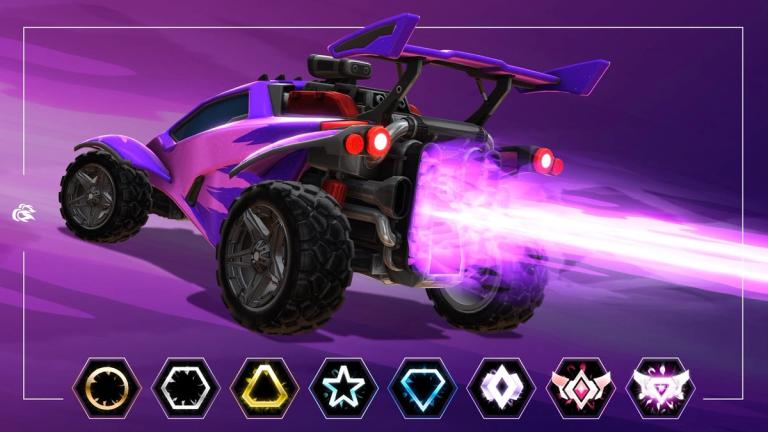
Rocket League MMR is one of the most determining factors on who you play. Take a look at what it is, how to track it, and more.
In gaming, MMR refers to “matchmaking rating,” which is the invisible rank attributed to each player. As you win games and lose them, the system behind the scenes assigns you a value and tries to match you with players within a certain range.
This practice is commonly referred to as “skill-based matchmaking,” where groups of similarly skilled players are matched with one another. In shooters, high-level players tend to complain about skill-based matchmaking, but there’s no argument as to whether or not it benefits lower-skilled players: it does.
In Rocket League, MMR is everywhere - whether in ranked or in casual play. Unlike shooters, people tend to agree with skill-based matchmaking in Rocket League. The skill gap is far too large for new players to be playing against veterans. Such a system would be unenjoyable for both sides, with teams being as small as they are.
Rocket League Unranked MMR
In ranked matches, MMR is typically transformed into your rank. A Silver player has Silver MMR, and a Champion has Champion MMR. Each skill tier plays against similarly ranked players as they raise and lower their ranked MMR.
In unranked, MMR is still present - although it happens behind the scenes. If you’re a new player, your MMR will be low, and you’ll be playing against those of similar skill. The same can be said for veteran players.
Since there isn’t an obvious number attached to your unranked MMR, some people may assume it’s not attached. This is not the case, however, as MMR is just as relevant within these modes - if not more.
There are some instances in Rocket League when MMR is looser or less important. Limited-time modes and special modes like Dropshot don’t seem to have the strict MMR that other modes have despite keeping some level of structure.
Ranked MMR in Rocket League
Although unranked MMR is still important and affects the overall gameplay experience, it’s not nearly as important as ranked MMR - which is also easier to understand. Some ranked games, like Overwatch, calculate your rank and MMR separately. In these games, you can be hard-stuck in a rank while playing people who are ranked above you. This is all MMR-based, not rank-based.
Thankfully, Rocket League doesn’t have the same system. In Rocket League, your MMR is tied to your rank but isn’t the determining factor in ranked matches. Therefore, it’s possible to have a separate ranked MMR and unranked MMR in the game.

Rocket League ties your rank to your MMR. This means that a Gold player will be playing with and against people in Silver, Gold, and Platinum, while a Diamond player will be facing Platinum, Diamond, and Champion players - depending where on the ranked tier they fall. High Diamond players will run into Champs, while low Diamond players will see more high Plats in their games.
Rocket League Ranks
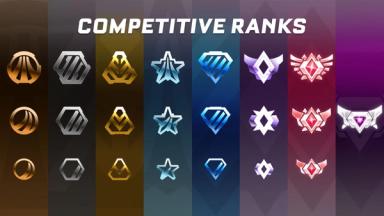
The ranks in Rocket League include the following:
- Unranked
- Bronze
- Silver
- Gold
- Platinum
- Diamond
- Champion
- Grand Champion
- Supersonic Legend
Within these ranks, there are four divisions. Ranking through these divisions will propel you into the next rank, where the same thing will happen until you reach a wall - or break through the wall and make it all the way to Supersonic Legend.
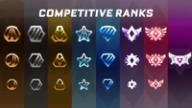
All 22 Rocket League Ranks Explained (2026)

The Rocket League divisions are:
- Division 1
- Division 2
- Division 3
- Division 4
As you can see, it’s much easier to find your Rocket League MMR in ranked. All you need to do is jump into a match and see who you’re playing against. Even if you’re unranked, you should have a general MMR that matches you against similarly skilled players.
How to Find Your MMR
Finding your MMR in Rocket League is easy in ranked. You will be playing against players who are of similar skill, so you’ll easily be able to assess your ranked MMR. If you are already ranked, all you need to do is check what rank you are - that’s your MMR.
In unranked, things are a bit more difficult. It’s a hidden statistic for a reason, so those who never engage with the ranked ladder probably won’t be able to tell exactly where their MMR lies. Luckily, there are some options for MMR tracking for those who play ranked.
BakkesMod is one of the easiest ways to consistently track your MMR in ranked play. You’ll be able to see all of your matches and how your ranking raises and lowers based on your play. This is one of the best quality-of-life mods for PC players, as it allows you to even tailor your settings to what individual Rocket League pros use. For more information on that, take a look at our article on the best Rocket League settings.
If you’re not playing on PC, you still have a way to track your Rocket League ranked MMR. Our User page offers players detailed information on their rank, MMR, statistics, and more. It’s an easy way for players on all platforms to track how they’re doing in ranked play.
What is “Smurfing?”
MMR and smurfing go hand-in-hand, but not everyone knows why. The purpose of smurfing is to trick a game into thinking you’re a new or bad player when the reality is much different.
In general, the term “smurfing” refers to creating a new account and demolishing lower-ranked players with your higher skill. Every new account starts at a low MMR, so any experienced player who starts a new account will be smurfing to some degree, but not all smurfing is created equal.
Sometimes, players will intentionally lose or throw matches to keep their MMR low. They sometimes do this to play with lower-ranked friends, but there’s often an element of trolling to smurfing.
Smurfing is typically frowned upon in gaming, and Rocket League is no different.
Start Your Grind Today!
If you’re trying to get started with some Rocket League, you don’t need to worry much about your MMR. As you play the game, you’ll start to be matched with players of similar skill - and all you need to worry about is getting better.
If you need some help along the way or are interested in watching the best players in the world compete in Rocket League.

 Team Falcons
 Spacestation
 Team FalconsTeam FalconsSpacestationTeam Falcons